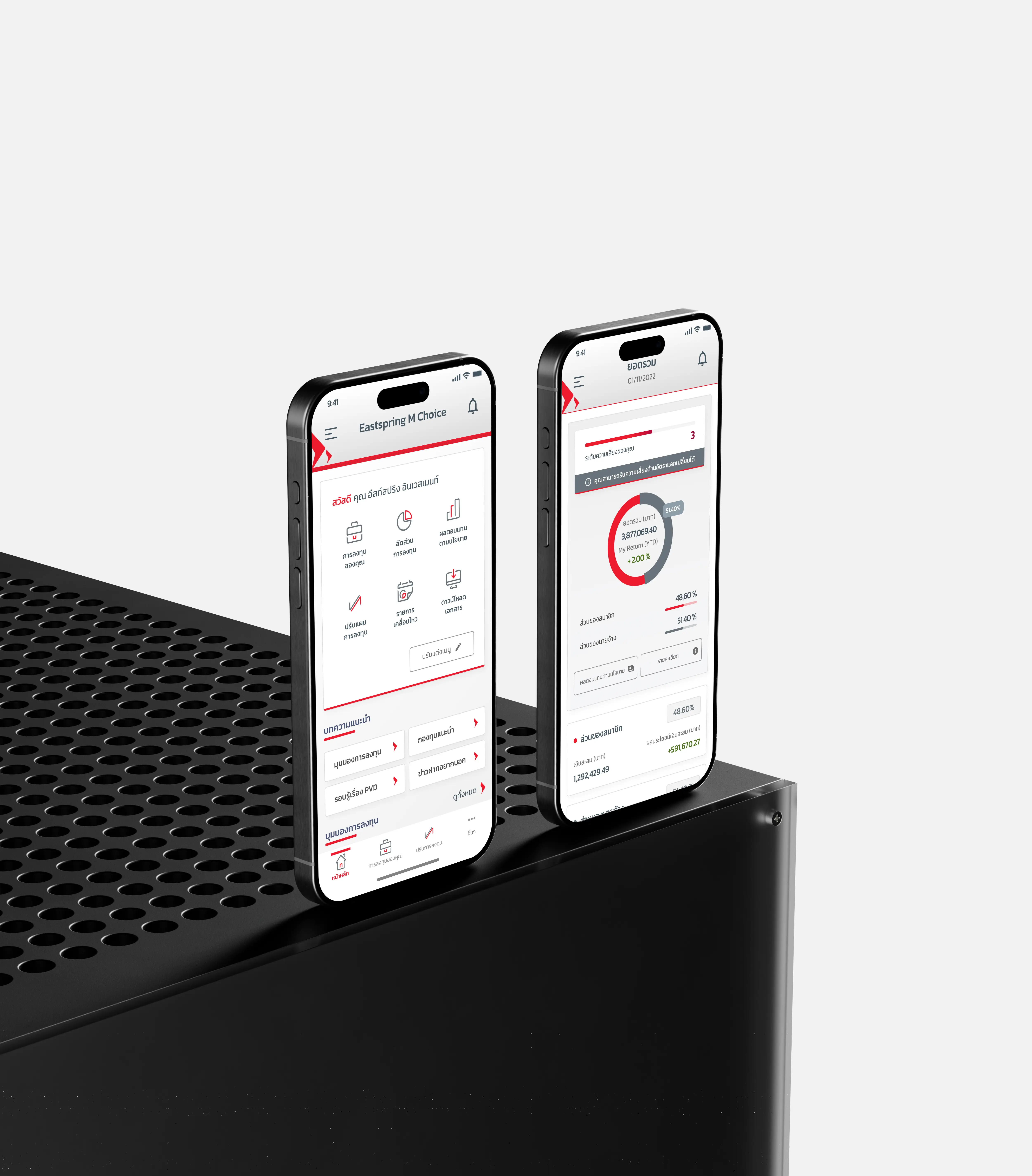
Eastspring M Choice TH
Designing a multi-stakeholder Provident Fund ecosystem
Company
CODEDIVA Company Limited
Client : Eastspring Asset Management (Thailand) Co., Ltd.
Industries
Finance
Role
UXUI designer
Date
2022-2023
Credit @eastspringthailand : https://www.youtube.com/watch?v=9VgqhNw05Hg
Project Overview
Multi-stakeholder PVD ecosystem
Mobile (Employee) + Web (Employer/FC)
Governance-first workflow
Foundation for future MF integration
Structural Gap
• Fragmented workflows across employees, employers, and fund committees
• Limited cross-role status visibility
• Not designed for multi-product scalability
Strategic Shift
• Built unified PVD ecosystem (Mobile + Web)
• Introduced role-based access & approval routing
• Standardized transaction status architecture
• Established foundation for Mutual Fund (Phase 2)
Design Principles
• Governance-first UX
• Role-aware interface design
• Transparency in contribution & approval states
• Scalable system logic for future product expansion




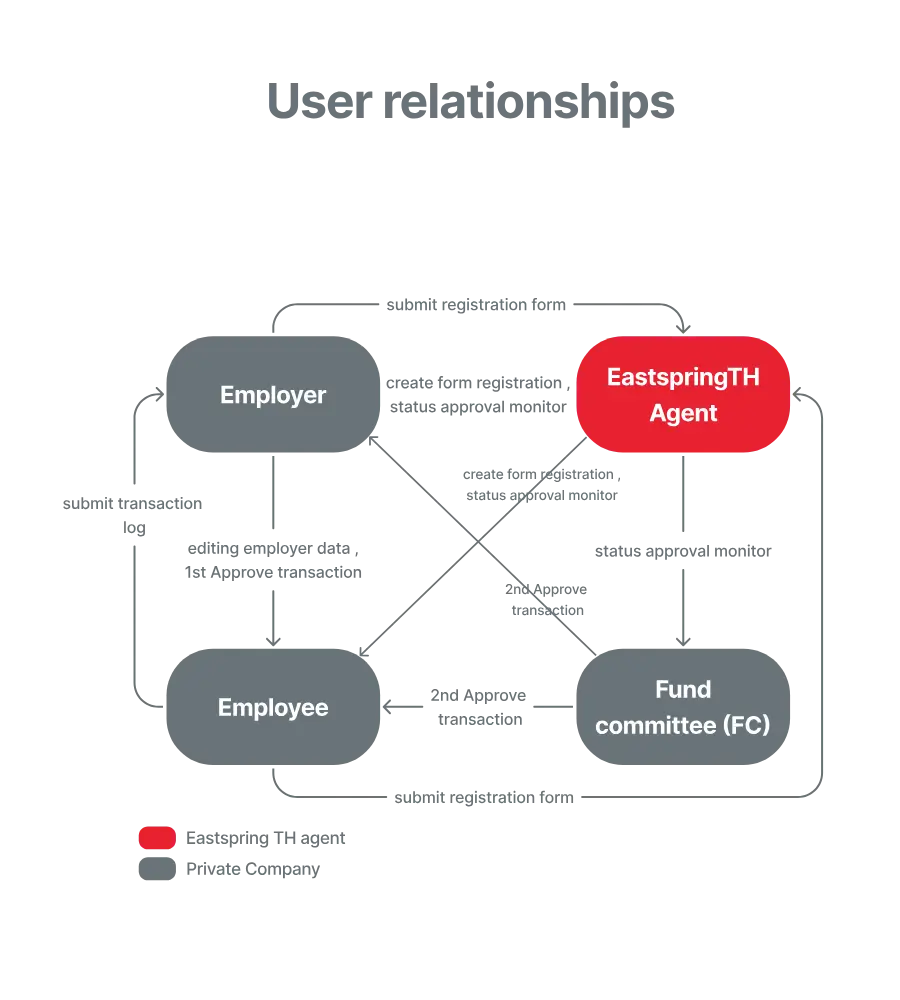
Role Architecture Diagram
The ecosystem consists of:
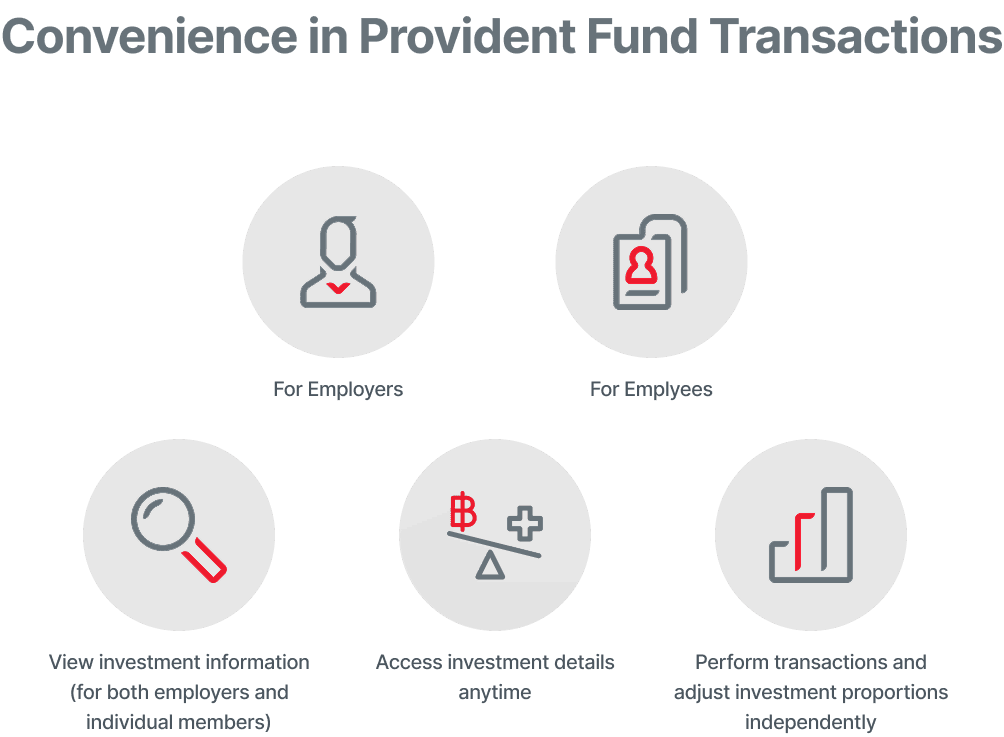
PVD App (Mobile) – Employee self-service
PVD Web (Web Portal) – Employer management & approvals
FC App / FC Web – Fund committee authorization
Internal Dashboard – Operational monitoring
All platforms connect to a centralized transaction state model, ensuring:
Consistent approval routing
Clear state transitions
Cross-platform visibility without duplication
Governance-aligned data access
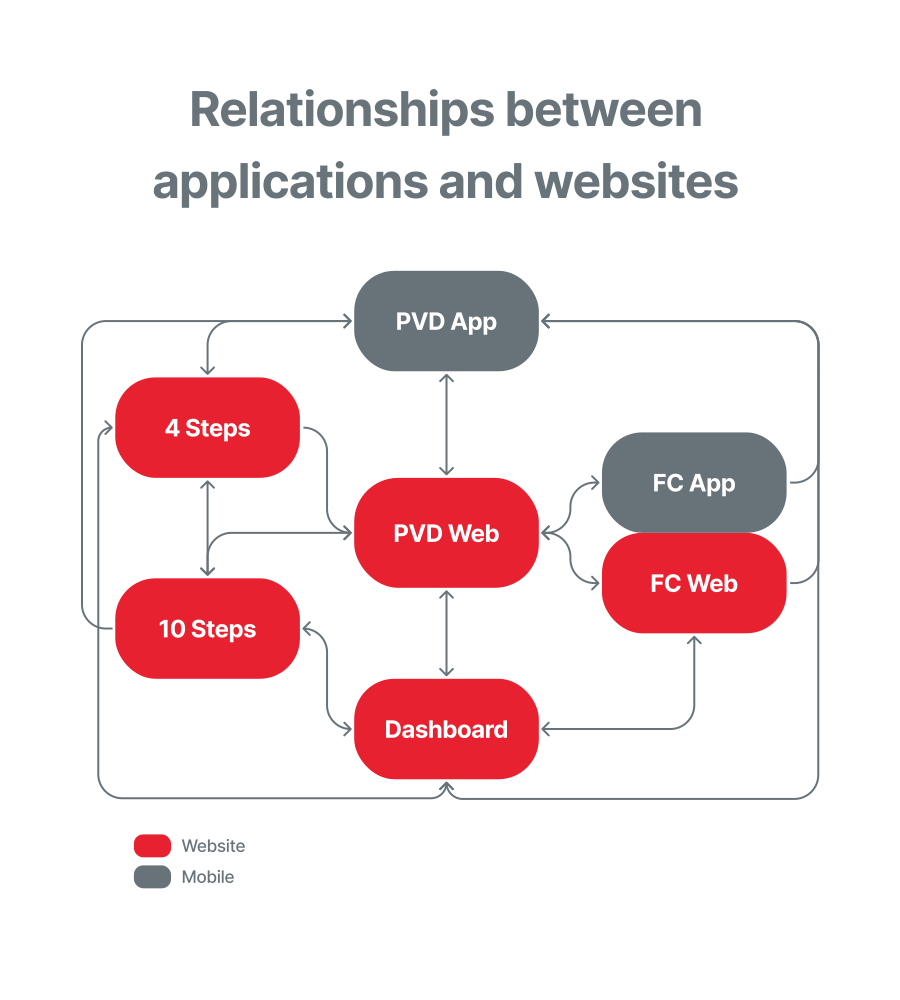
The relationships between menus are critical, as moving or reordering them can lead to significant consequences. When implementing any changes, it is essential to carefully consider the potential impact on other parts of the system.
Core Problem: Workflow Fragmentation
Fragmented approval routing
Ambiguous role visibility
Manual & cross-platform inconsistency
Cross-Platform State Governance & Managing Flow Complexity
Role-based permission model
Structured approval routing
Unified transaction history
Replaced fragmented approval handling
Standardized role-based permissions
Created scalable foundation
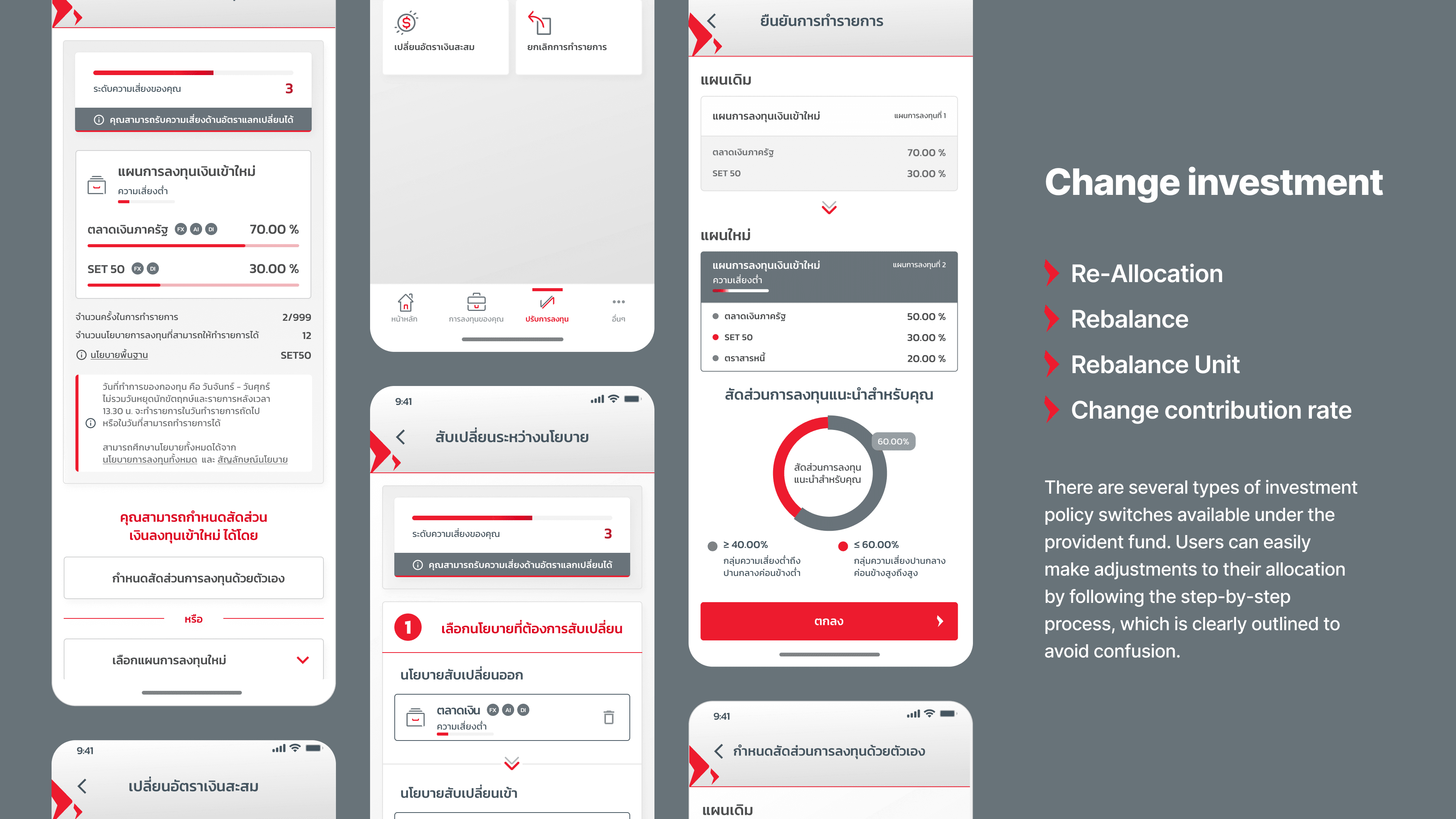
Visual Hierarchy & IA
Color hierarchy
Typography scaling
Controlled whitespace




Find out more details about Eastspring Investments
Impact & Learning
Product Impact
Replaced fragmented manual processes
Established reusable permission architecture
UX Impact
Reduced ambiguity in multi-level approvals
Strengthened confidence in high-value retirement actions
Key Learning
Multi-actor fintech products are workflow systems